One robot cell absorbing 12-15 cases per minute with a validated multi-pick strategy
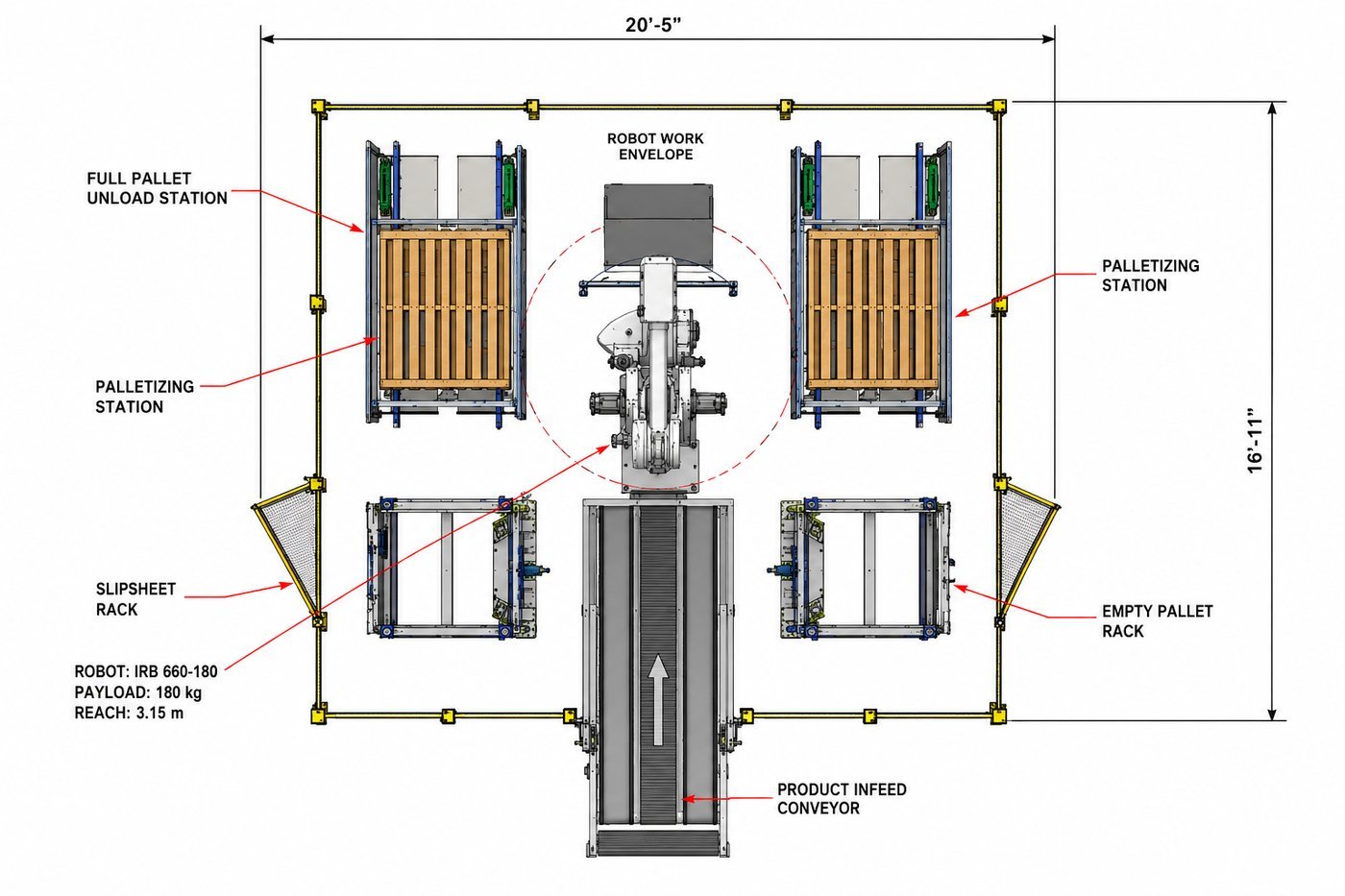
The brief: absorb 12-15 cases per minute of 20 kg cases into a deterministic pick-group-place-discharge cycle on a standard 1000 x 1200 mm pallet.
A 3-case pick (Recipe A) needs a 12-15 second average cycle and closes the six-case layer naturally in two picks. A 4-case pick (Recipe B) needs 16-20 seconds and uses more of the robot's load margin -- pallet completion may need a variable-release or alternate pattern strategy. The preliminary six-case layer favors the 3-case recipe.
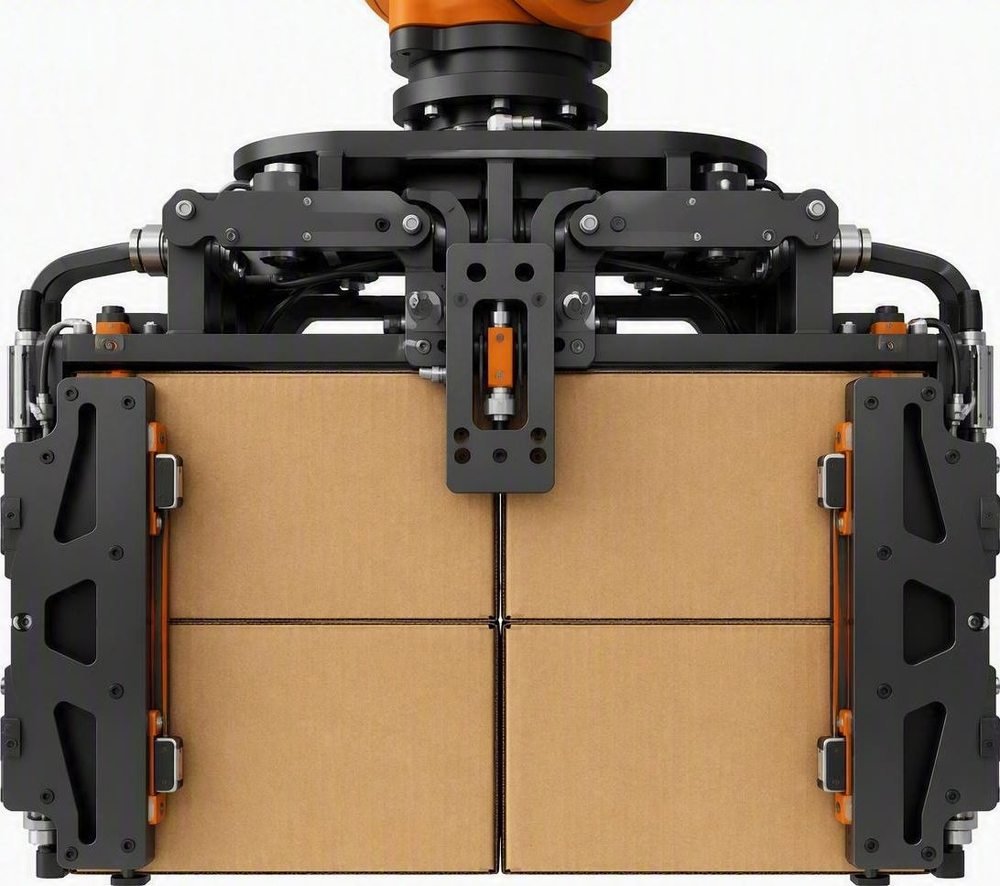
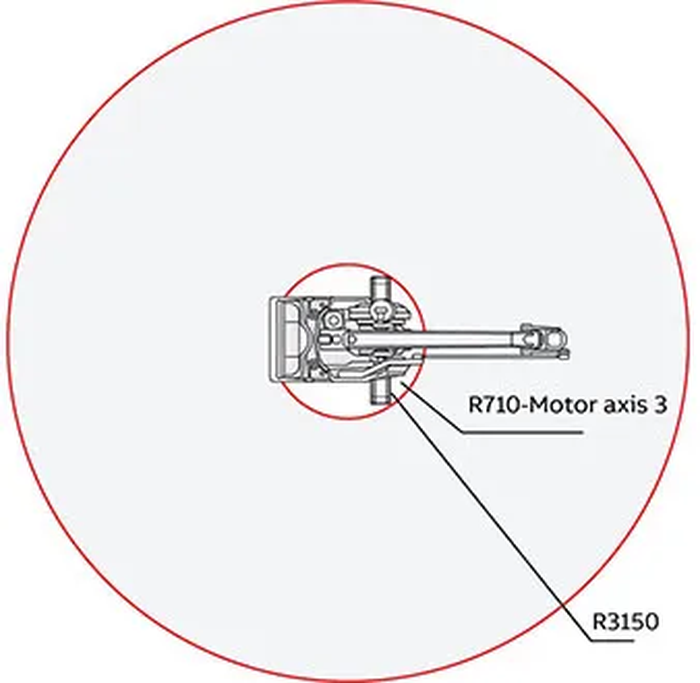
20 kg per case is only a nominal mass margin -- the real design gate is 160 kg of combined moving mass in 4-case mode against the robot's full load diagram: center of gravity, wrist torque and inertia across all axes, the dynamic acceleration/deceleration/E-stop profile, and reach and collision at the highest layer.
The conveyor owns the pick position: stops, sensors, guides, and VFD/servo control create a repeatable pick group before the robot ever enters the cycle. The pallet is stopped, centered, and confirmed before it is released to the robot's placement recipe -- buffer, group, pick, transfer, place, discharge, in that order, every time.
Recipe carries pick quantity, pallet pattern, layer count, and recovery rules
Dual confirmation (case presence + clamp pressure) before every grip
Central PLC and robot controller split responsibilities cleanly
FAT/SAT proof points defined before build: throughput, stack stability, fault recovery, safety functions
Preliminary engineering case study — proposal values to be confirmed through detailed design and customer design review. Final compliance depends on the destination market and a formal risk assessment.