Converting continuous can flow into repeatable 42-can pallet layers without disrupting the filler
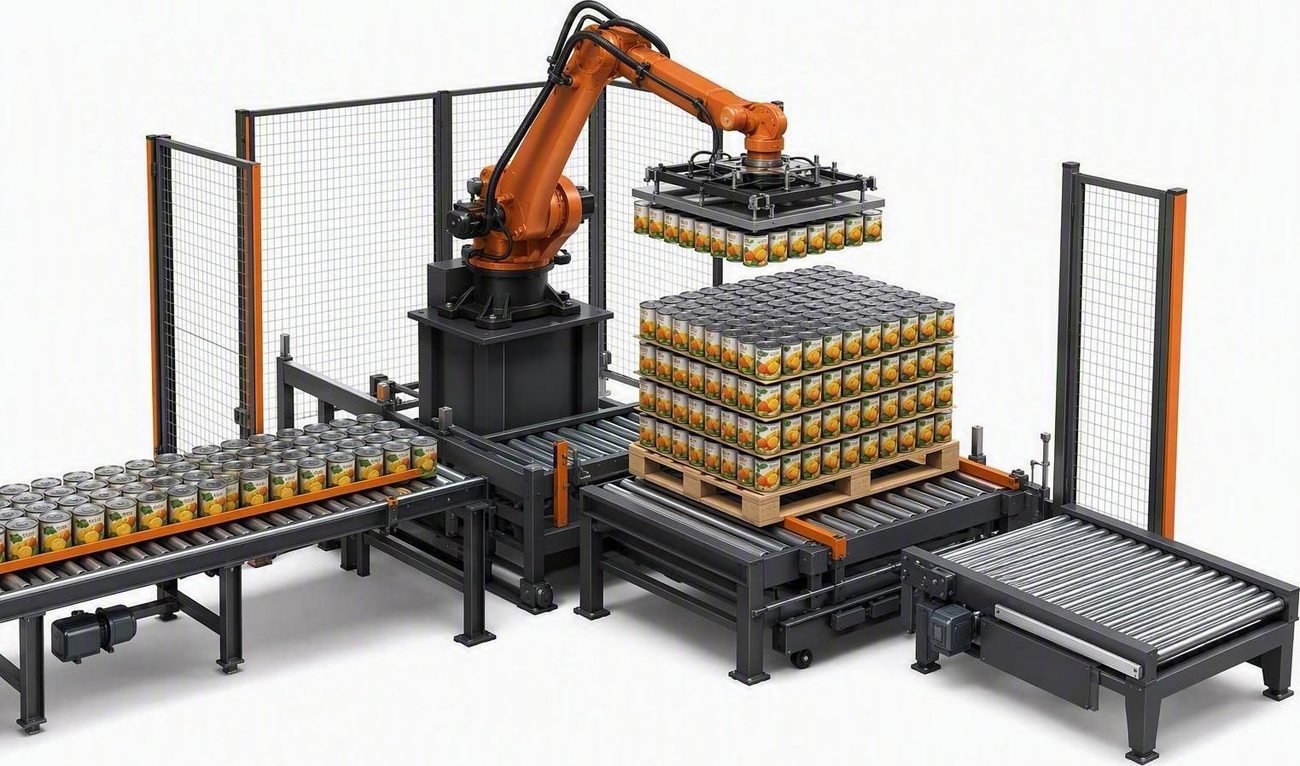
The brief: palletize 30 cans/min without disrupting the filler -- by converting continuous can flow into repeatable, fully verified 42-can pallet layers.
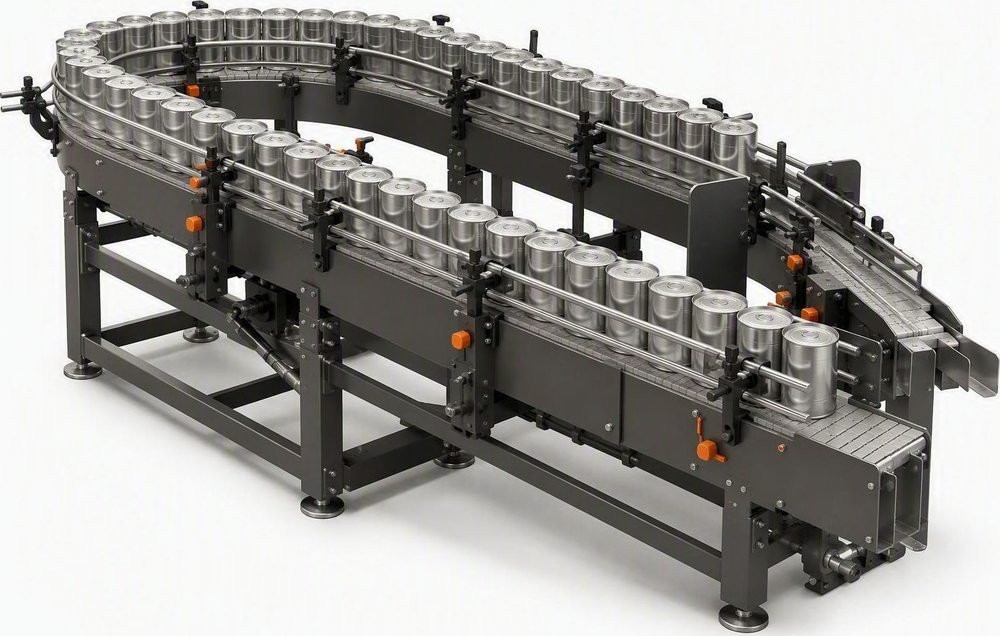
Controlled accumulation zones let upstream production continue while each 42-can pickup matrix forms and is verified. A minimum working buffer of two matrix-loads (84 cans) absorbs short stoppages without ever touching the filler's own cadence.
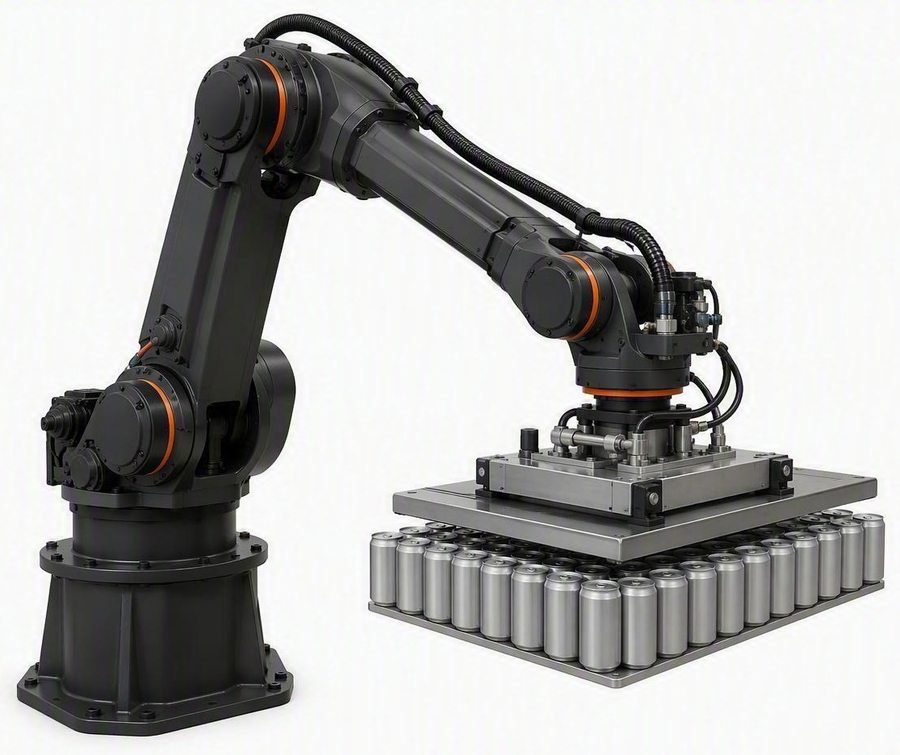
42 cans at 3.5 kg each is 147 kg of product, plus a 55 kg magnetic gripper and 10 kg of auxiliary equipment -- 212 kg operating payload. Applying a 1.25x design factor for acceleration and dynamics brings the design load to 265 kg, pointing to a robot class of 300 kg or more before reach, inertia, and duty-cycle checks.
Product flow and pallet flow stay distinct, then synchronize through PLC and robot permissives: no matrix release, robot pick, or pallet placement proceeds without an explicit position and status confirmation. The result is a cell where jam, count, and accumulation states are PLC conditions -- not operator judgment calls.
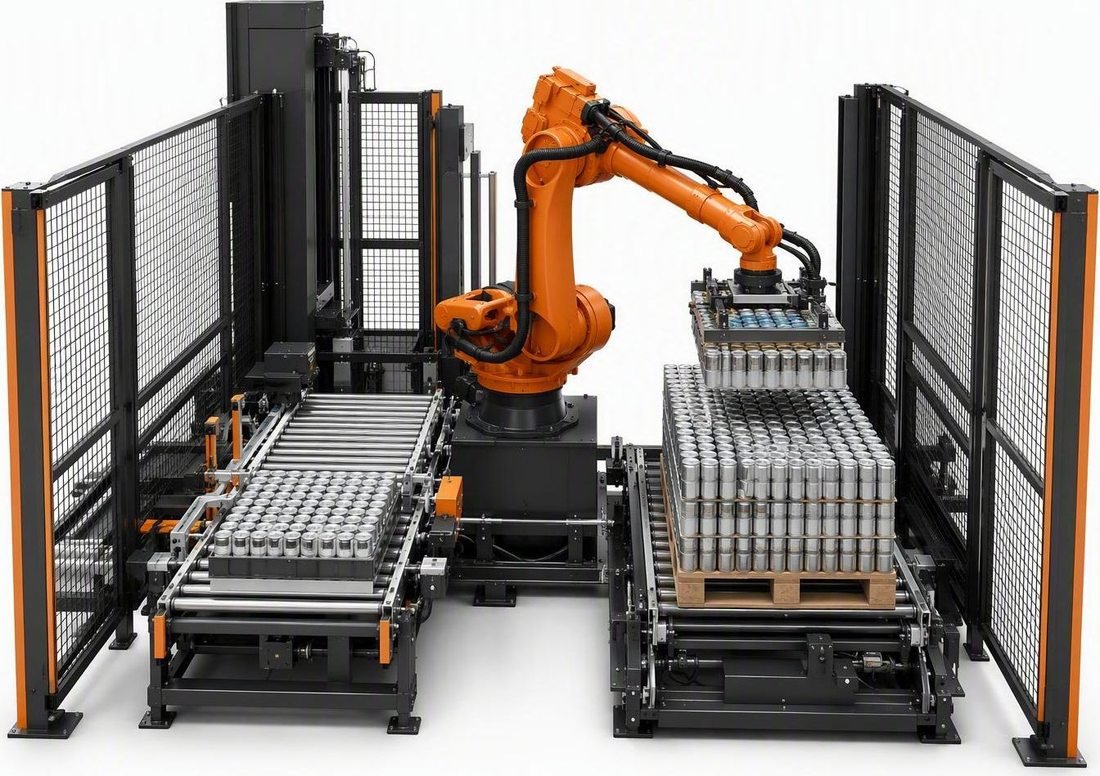
A complete 42-can matrix becomes available every 84 seconds at 30 cans/min, against a non-overlapped robot movement budget of roughly 13 seconds -- an illustrative utilization near 15%. Buffering governs the cadence while the robot itself retains headroom for slip-sheet moves and future rate increases.
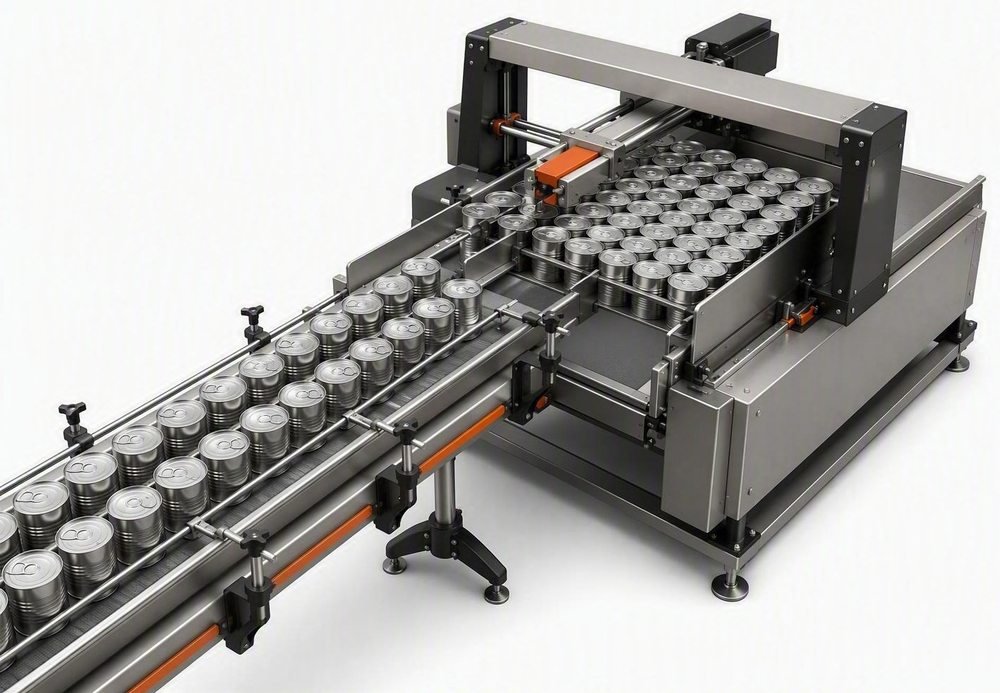
Buffered design keeps the filler running independent of robot cycles
Robot class sized with margin, not picked to the bare minimum
Explicit PLC/robot permissives replace operator judgment calls
Delivery path scoped from freeze through FAT/SAT to site acceptance
Illustrative engineering case study. Final can geometry, filled weight, magnetic pull testing, line rate, and approved pallet pattern remain customer-confirmed release gates for detailed design.